 USD
USD INR
INR
Als
أغسطس 05, 2026

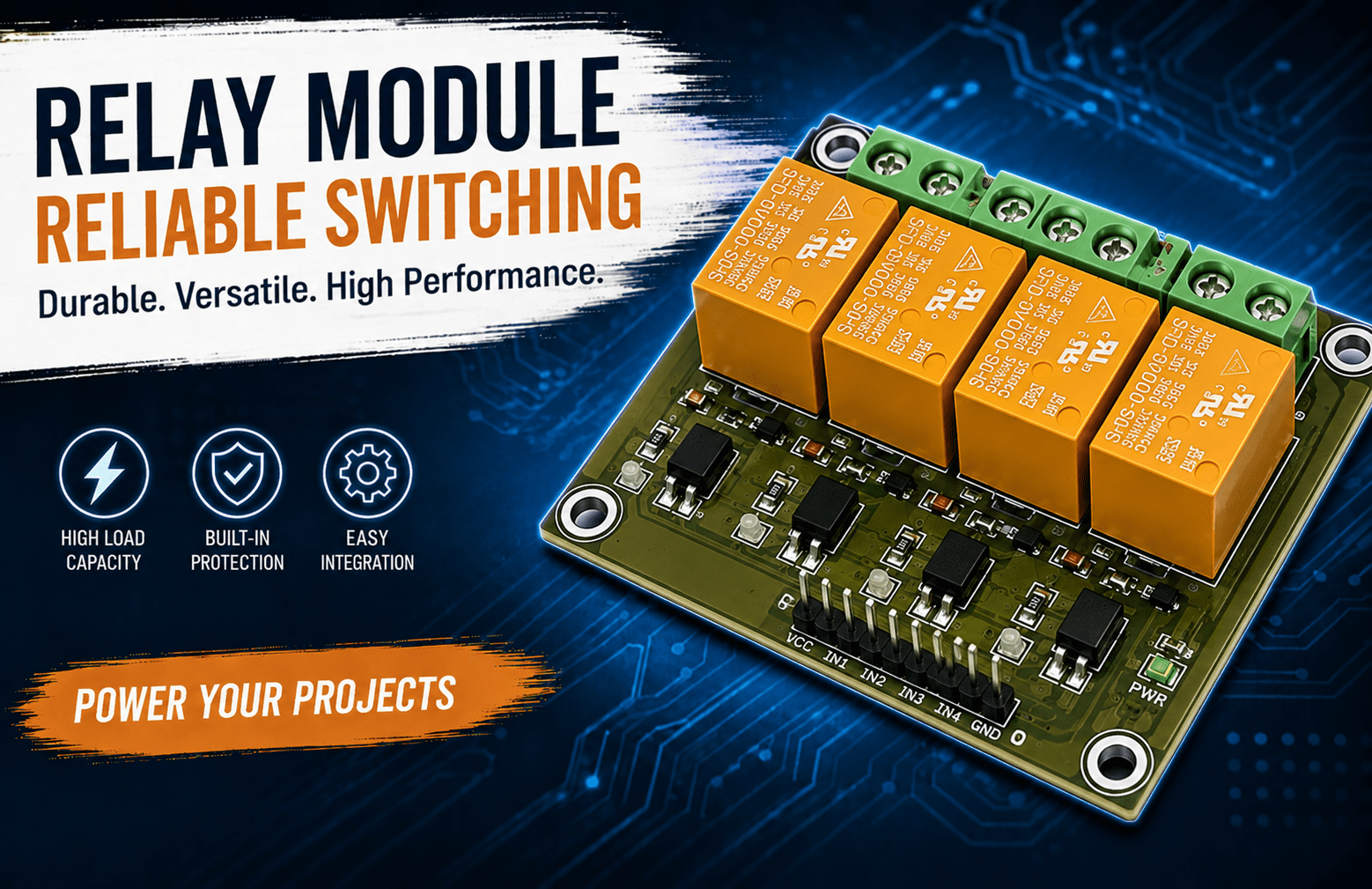
A relay module is a useful electronic component that allows a low-power circuit to control a high-power device. It is commonly used with Arduino, ESP boards, Raspberry Pi, and other microcontrollers to switch lights, fans, motors, pumps, appliances, and other electrical loads.
In simple words, a relay works like an automatic switch. Instead of turning a device on or off by hand, a controller can operate the relay based on a program, sensor reading, timer, or user command.
Microcontrollers cannot directly control high-voltage or high-current devices. Their output pins are designed for low-power signals only. A relay module helps solve this issue by separating the control circuit from the load circuit.
This makes relay modules useful for automation projects where electronic boards need to control larger devices safely and reliably.
A relay module receives a control signal from a microcontroller. When the signal is active, the relay switches its output contacts and allows power to flow to the connected device.
Most relay modules include input pins for signal control and output terminals for connecting the load. Some relay modules also include indicator LEDs and protection circuits for easier testing and safer operation.
Relay modules are widely used in electronics, automation, and DIY projects. Common applications include:
Relay modules are available in different channel options. A single-channel relay can control one device, while multi-channel relay boards can control multiple devices from the same microcontroller.
For example, a 4-channel relay module can control four separate devices such as a light, fan, pump, and buzzer. This is useful when building larger automation systems.
When working with relay modules, proper wiring is very important. Always check the voltage and current rating of the relay before connecting any load. For AC appliances or high-voltage connections, proper insulation and safe handling are necessary.
Beginners should test relay modules with low-voltage DC loads before using them in higher-power applications.
Relay modules are simple, practical, and powerful switching components for automation and electronics projects. They help microcontrollers control external devices safely and make projects more useful in real-world applications.
At Dotfry, you can find relay modules, Arduino components, sensors, motor drivers, power supplies, and other electronics parts for your project needs.
Relay modules help Arduino and other microcontrollers control lights, fans, motors, pumps, and electrical devices through simple switching.
Relay Modules for Arduino and Automation Projects
Learn how relay modules work, their benefits, common applications, and uses in Arduino, home automation, motor control, and DIY electronics projects.
Power supply modules provide stable voltage and current for Arduino, robotics, IoT, LED, motor, and DIY electr...

أغسطس 05, 2026
يونيو 23, 2026

يونيو 23, 2026
يونيو 23, 2026

يونيو 23, 2026
Cookie preferences