USD
USD INR
INR
Call Us Now
+91 9106756572
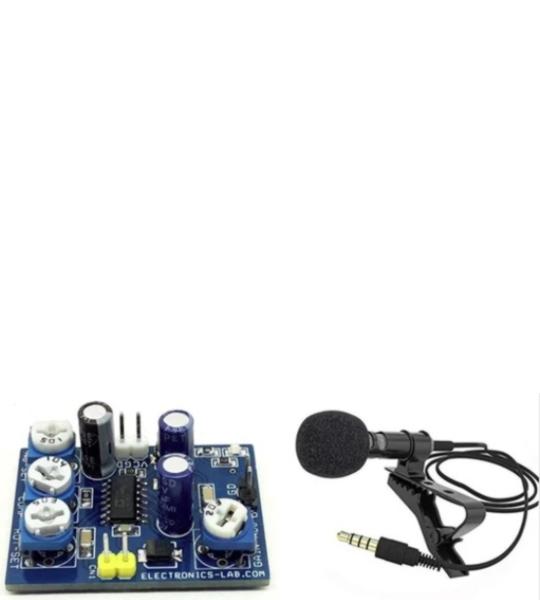
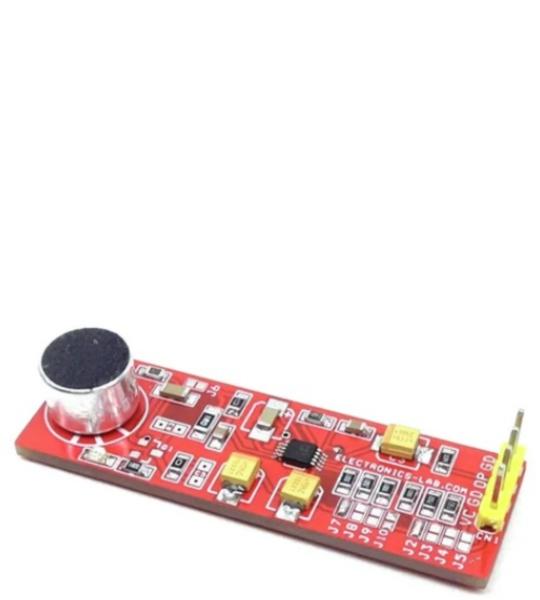
The circuit shown here is a complete microphone signal conditioning system based on a single SSM2166 integrated circuit. Designed primarily for voiceband applications, this integrated circuit provides amplification, RMS detection, limiting, variable compression, and downward expansion. An integral voltage-controlled amplifier (VCA) provides up to 60dB of gain in the signal path with approximately 30kHz bandwidth. Additional gain is provided by an input buffer OPAMP circuit that can be set anywhere from 0 dB to 20 dB, for a total signal path gain of up to 80 dB. The project operates on a single +5 V supply, accepts input signals up to 1Vrms, and produces output signal levels > 1 Vrms (3Vp-p) into loads > 5 kΩ. The internal RMS detector has a time constant set by an external capacitor. The SSM2166 contains an input buffer and automatic gain control (AGC) circuit for audio and voiceband signals. Circuit operation is optimized by providing a user-adjustable time constant and compression ratio. A downward expansion (noise gating) feature eliminates circuit noise in the absence of an input signal. Onboard trimmer potentiometer allows the user to set the downward expansion threshold, the limiting threshold (rotation point), input buffer fixed gain, and the internal VCA’s nominal gain at the rotation point.
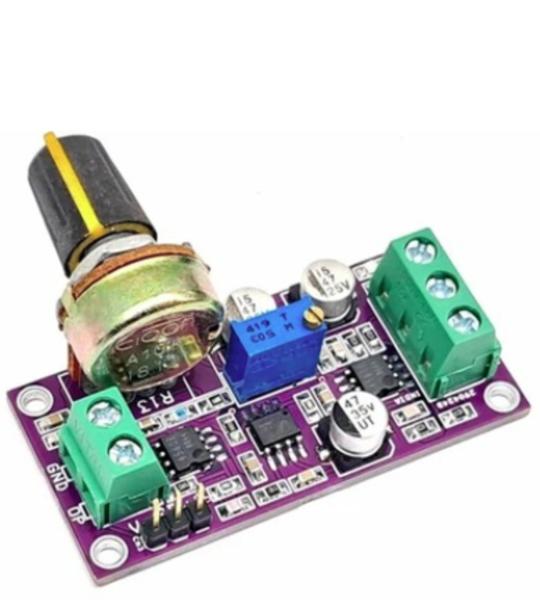
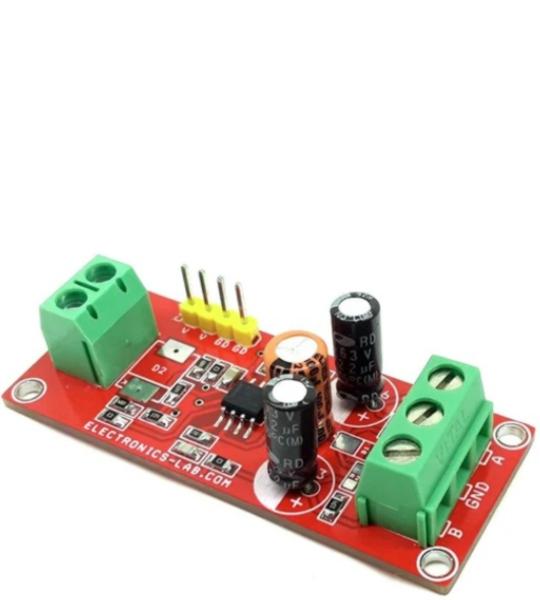
The project presented here is a Voltage Controlled Amplifier (VCA). A VCA board helps users control the audio level from a remote potentiometer. This board requires a balanced audio signal. Gain control voltage can be adjusted through potentiometer R13. The project works with a dual (±15V) power supply. Screw terminal connectors are provided for signal input and signal output. The project is built using THAT2181LA chip which is a VCA, designed for high performance in audio-frequency applications requiring exponential gain control, low distortion, wide dynamic range, and low control-voltage feedthrough. This chip controls the gain by converting an input current signal to a bipolar logged voltage, adding a DC control voltage, and re-converting the summed voltage back to a current through a bipolar antilog circuit. Stereo control of VCA with a single potentiometer is possible.
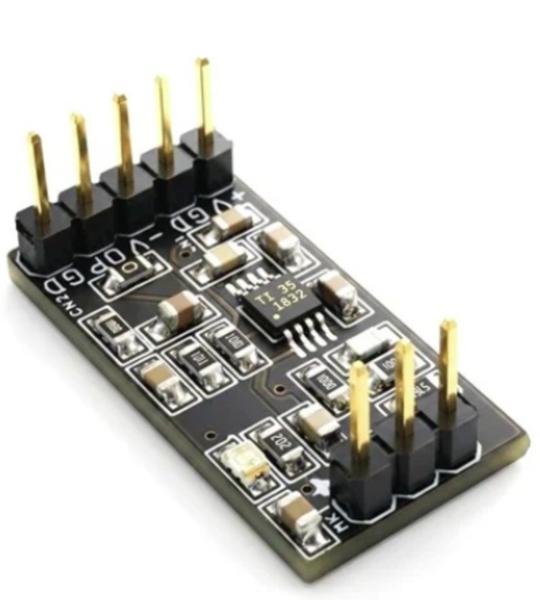
The TLV6741 is a 10 MHz op amp with low broadband noise. Its small SC70-5 package and low operating voltage make it well suited to this kind of preamplifier circuit.
This 3-wire microphone pre-amplifier is designed using the low-power, low-noise, and low-distortion OPA1692 audio operational amplifier, making it ideal for high-performance electret microphone applications. The circuit is optimized for electret microphones that use a 3-wire interface, providing excellent audio quality while maintaining minimal power consumption.
This is a complete microphone signal conditioning project. Designed primarily for voice-band applications, this project provides amplification, limiting, variable compression, and noise gate. User-adjustable compression ratio, noise gate threshold, and two different fixed gains optimize circuit operation for a variety of applications.
The board presented here is a preamplifier for contact microphones that are used for amplifying the sound of musical instruments which do not contain electrical pickups, such as guitar and violins. Most contact microphones use a piezo element to convert vibration in the body of the musical instrument to a voltage. The circuit is built using OPA1678 OPAMP. The low noise and low input bias current of the OPA1678 makes the device an excellent choice for high impedance preamplifiers for piezo elements. This preamplifier circuit provides high input impedance for the piezo element but has low output impedance for driving long cable runs. It provides a balanced audio output that can be fed to a balanced microphone pre-amplifier. The circuit has also the option for phantom power input. Install R3=1.2K Ohms, R2=1.2K Ohm and Zener diode 24V.
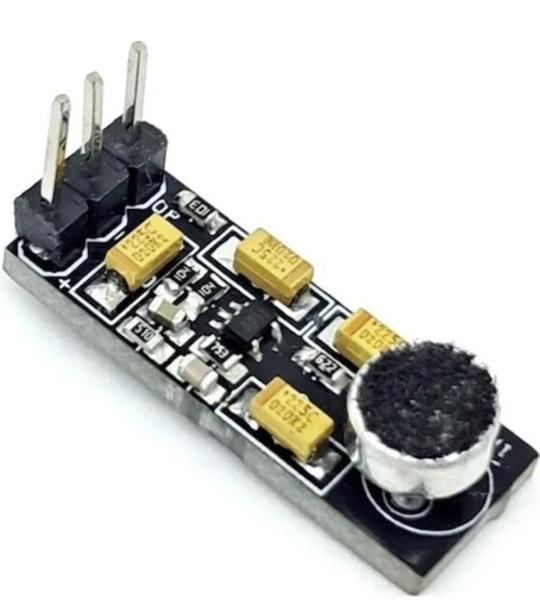
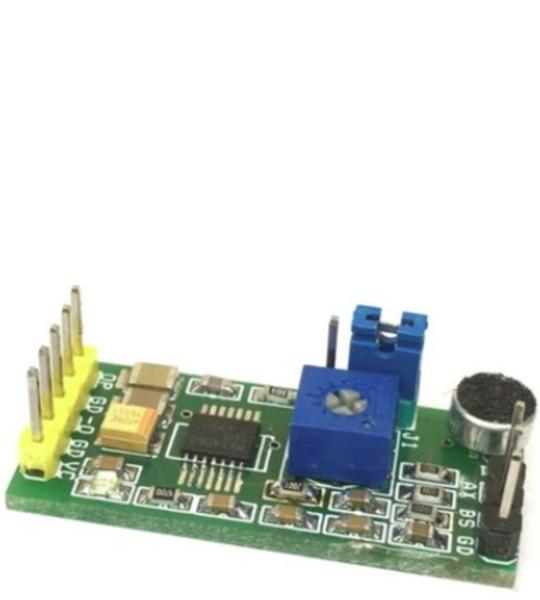
The project shown here is a microphone preamplifier that provides high quality amplification, optimized for use in computers, media and mobile applications. The pre-amplifier provides a differential input stage, making the device particularly effective when layout constraints force the microphone amplifier to be physically remote from the ECM microphone. This project features adjustable gain using PR1 trimmer potentiometer, very high power-supply rejection (95dB), and common-mode rejection (79dB), making it ideal for low-noise applications. Board is provided with condenser microphone as well as connector to connect external microphone, selection of external or internal microphone is possible with the help of on board Jumper. Circuit requires 5V DC input. The circuit provides differential output, use +OP/GND for single ended output. External microphone gain can be changed using R5.
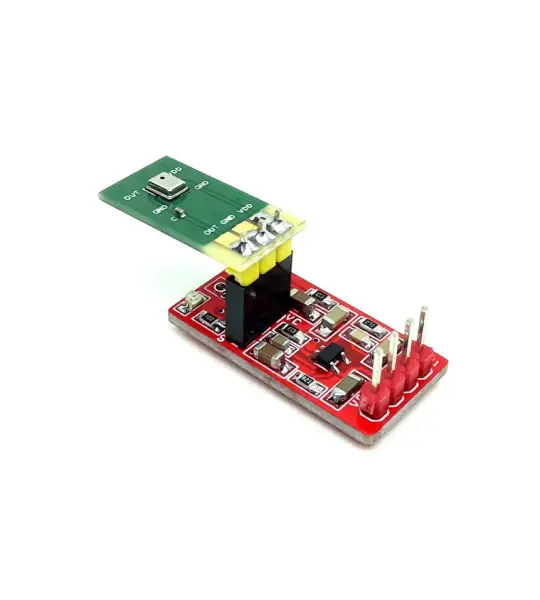
This is a low-cost, small-size audio pre-amplifier for MEMS microphone, OPAMP-based circuit amplifies the low-level analog signal
Cookie preferences