USD
USD INR
INR
Call Us Now
+91 9106756572
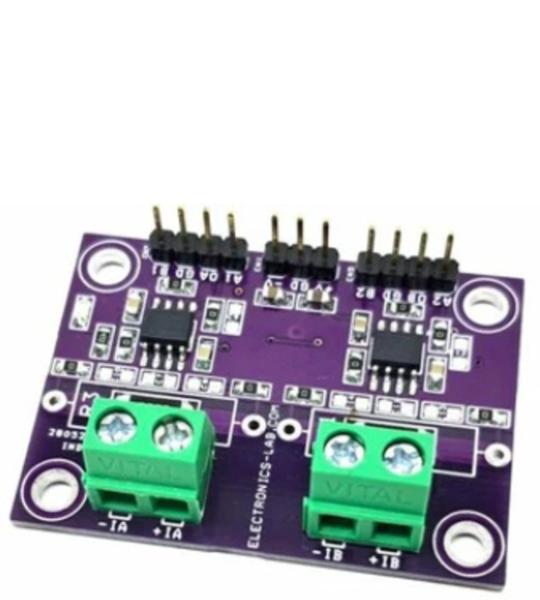
This board is built using a 2 x INA149 precision unity-gain difference amplifier with a very high input common-mode voltage range. The project can be used as a current sensor for high-voltage applications, INA149 provides a common-mode voltage range of +/-275V. The project operates with a wide supply range from +/-5V to +/-15V. The circuit measures current by sensing the voltage drop across a series of resistors RS, R4, and R12. The application circuit shows the INA149 used to measure the supply currents of a device under test. The sense resistor imbalances the input resistor matching of the INA149, thus degrading its CMR. Also, the input impedance of the INA149 loads RS, causes a gain error in the voltage-to-current conversion. Both of these errors can be easily corrected.
This board is built using a 2 x INA149 precision unity-gain difference amplifier with a very high input common-mode voltage range. The project can be used as a current sensor for high-voltage applications, INA149 provides a common-mode voltage range of +/-275V. The project operates with a wide supply range from +/-5V to +/-15V. The circuit measures current by sensing the voltage drop across a series of resistors RS, R4, and R12. The application circuit shows the INA149 used to measure the supply currents of a device under test. The sense resistor imbalances the input resistor matching of the INA149, thus degrading its CMR. Also, the input impedance of the INA149 loads RS, causes a gain error in the voltage-to-current conversion. Both of these errors can be easily corrected.
The board provides dual options for current sense resistors. Users may use THT resistors up to 3W R3, R11, or SMD 2512 R4 and R12 Up to 3W. The default circuit measures current up to 2A. Choose the appropriate current sense resistor for a higher or lower current sense range.
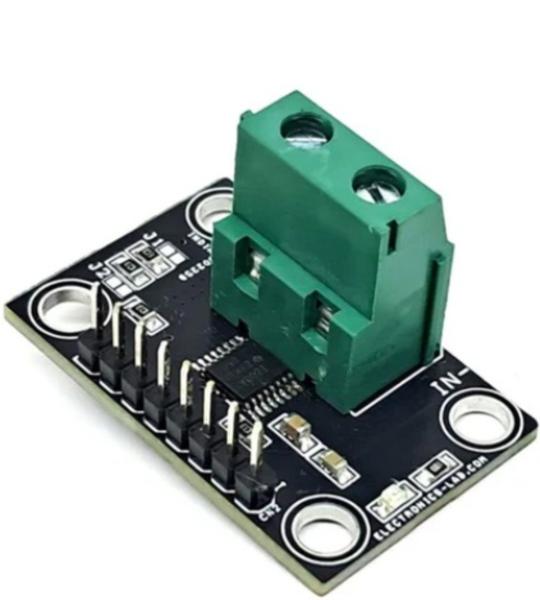
This isolated single-supply bidirectional current sensing project can accurately measure load currents from –2A to 2A. The linear range of the input is from –250mV to 250mV with a differential output range of –2.05V to 2.05V. The gain of the circuit is fixed at 8.2V/V. The project is based on AMC3301 chip which has a fully integrated, isolated DC/DC converter that allows single-supply operation from the low side of the device. The integrated DC-DC converter saves lots of board space. The reinforced capacitive isolation barrier is certified according to VDE V 0884-11 and UL1577 and supports a working voltage of up to 1.2 kVRMS. The isolation barrier separates parts of the system that operate on different common-mode voltage levels and protects the low-voltage side from hazardous voltages and damage. Output is fully isolated from the input and optimized for high voltage interface. The project provides differential output for easy interface with ADC. Operating Power supply 5V DC.
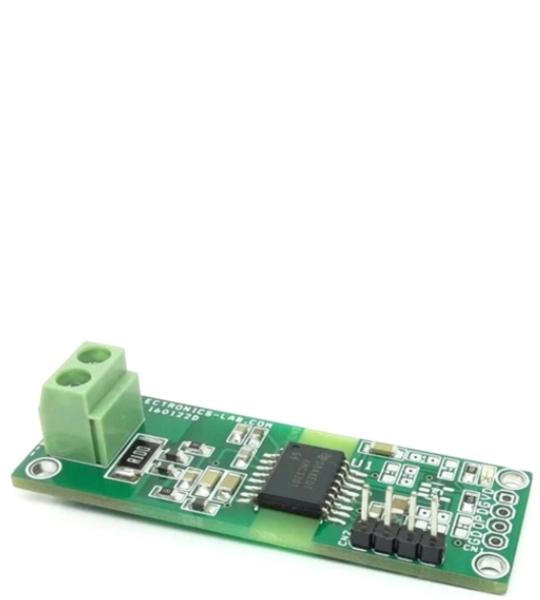
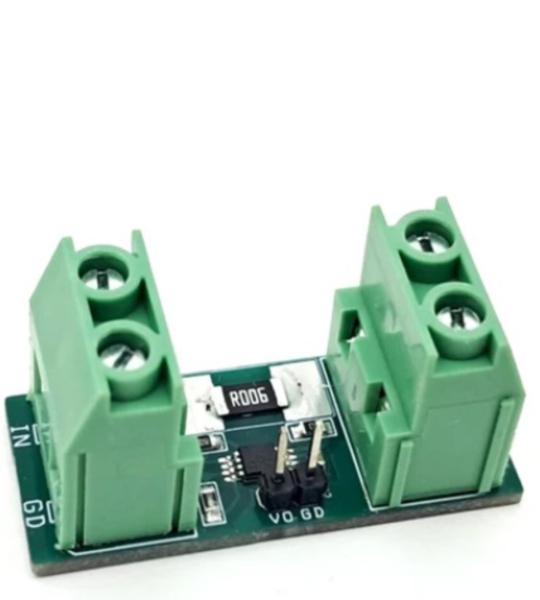
This is anUltra Precision Zero Drift High-Side Current-Sense Amplifier module, featuring the LTC6102 chip and it is designed to amplify the voltage drop across an on-board current-sense resistor, providing a precise unipolar output voltage proportional to the load current. The circuit incorporates a scaling resistor, R4, which programs the gain of the circuit to 33.3V/V. Notably, the LTC6102 enables current measurements on supplies ranging from 4V to 60V.
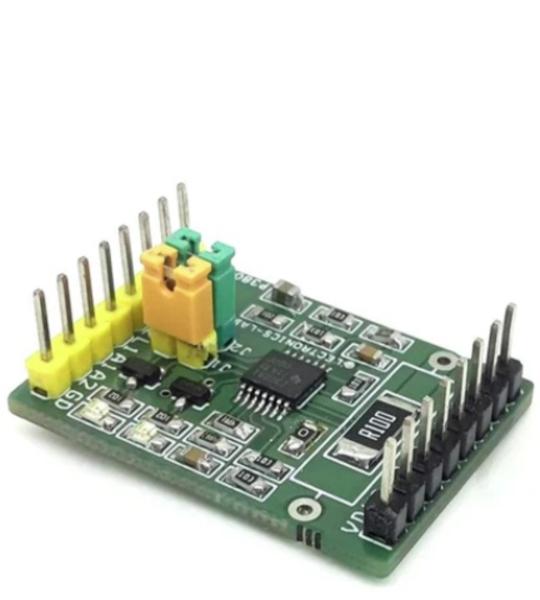
The project presented here is a high common-mode current sense amplifier with two high-speed comparators to detect out-of-range current conditions. The comparators are configured to detect and respond to dual over current conditions. These devices feature an adjustable limit threshold range for each comparator set using an external limit-setting resistor. Limit 1 Resistor is R10 and Limit 2 Resistor is R11. The board measures differential voltage signals on common-mode voltages that can vary from 0 V up to +36 V, independent of the supply.
This is a digital-output, current, power, and voltage monitor with an I2C and SMBus™-compatible interface with an integrated precision shunt resistor. It enables high-accuracy current and power measurements and over-current detection at common-mode voltages that can vary from 0 V to 36 V, independent of the supply voltage. Module is a bidirectional, low- or high-side, current-shunt monitor that measures current flowing through the internal current-sensing resistor. The integration of the precision current-sensing resistor provides calibration-equivalent measurement accuracy with ultra-low temperature drift performance and ensures that an optimized Kelvin layout for the sensing resistor is always obtained.
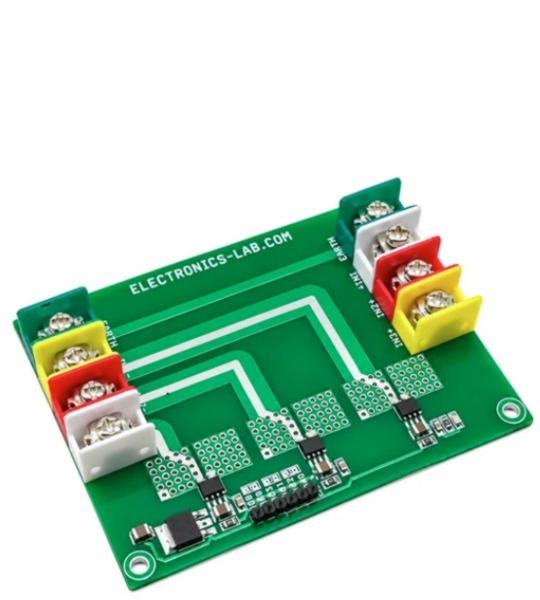
This is a 3-Phase isolated Hall-effect current sense amplifier with +/-600-V working voltage range. The current sensor senses magnetic flux generated from current passing through the lead frame at common-mode voltages 0 to 600V DC and provides proportional output voltage. The circuit is based on TMCS1101 IC which is a galvanically isolated Hall-effect current sensor capable of DC or AC current measurement with high accuracy, excellent linearity, temperature stability and has a bandwidth of 80KHz. A low-drift, temperature-compensated signal chain provides < 1.5% full-scale error across the device temperature range. The input current flows through an internal 1.8-mΩ conductor that generates a magnetic field measured by an integrated Hall-effect sensor. This structure eliminates external concentrators and simplifies design. Low conductor resistance minimizes power loss and thermal dissipation. Inherent galvanic insulation provides a 600-V lifetime working voltage and 3-kVRMS basic isolation between the current path and circuitry. Integrated electrical shielding enables excellent common-mode rejection and transient immunity. The output voltage is proportional to the input current with 50mV/A sensitivity. Fixed sensitivity eliminates radiometry errors, and improves supply noise rejection. The current polarity is considered positive when flowing into the positive input pin. The circuit is capable of sensing bidirectional current with +/-46A measurement range.
Cookie preferences