USD
USD INR
INR
Call Us Now
+91 9106756572


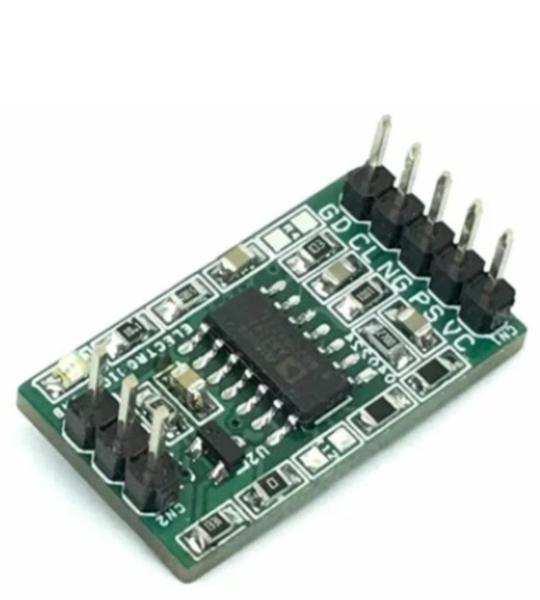
This is a simple signal conditioner circuit for Piezoelectric sensors. The circuit converts the input charge to voltage and the level shifts to the ADC input range of 0.1 V to 2.4 V. The circuit is built using AD8608 OPAMP from Analog devices. Piezoelectric elements are used to construct transducers for a vast number of different applications. Piezoelectric materials generate an electrical charge in response to mechanical movement, or vice versa, produce mechanical movement in response to electrical input. The board shown here is suitable for the Kistler type 8002K sensor. The K8002K is a high-precision accelerometer for shock and vibration measurements.
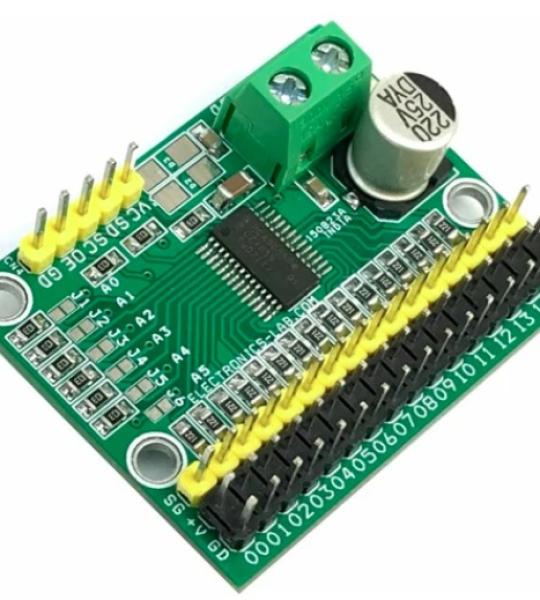
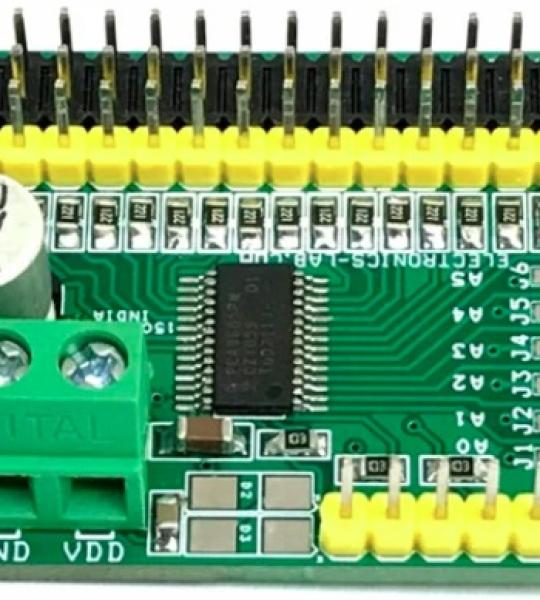
This is a 16-channel servo driver that can drive 16 x RC servos over I2C interface. The project is built using PCA9685 chip, a 16-channel PWM generator that can drive 16-channel servos simultaneously. The board can be connected to Arduino or another microcontroller. Driving robots, and animatronics puppets is easy with this board. The board works with 5VDC and a separate power supply connector is provided to power the RC servo with 6VDC. 6 x address Solder jumper is provided to set the board address, and this helps users to wire up 62 board on a single I2C line and drive up to 992 servos. The board also can be used for other applications that require 16-channel PWM signals. The frequency can be adjusted between 24 Hz to 1526 Hz and the duty cycle ranges from 0 to 100%.
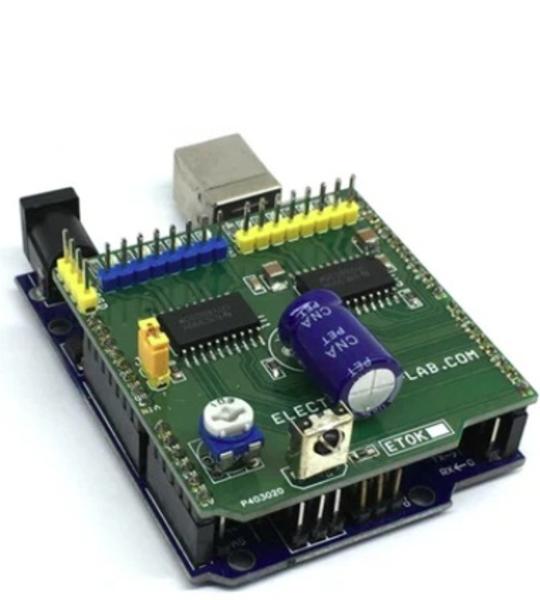
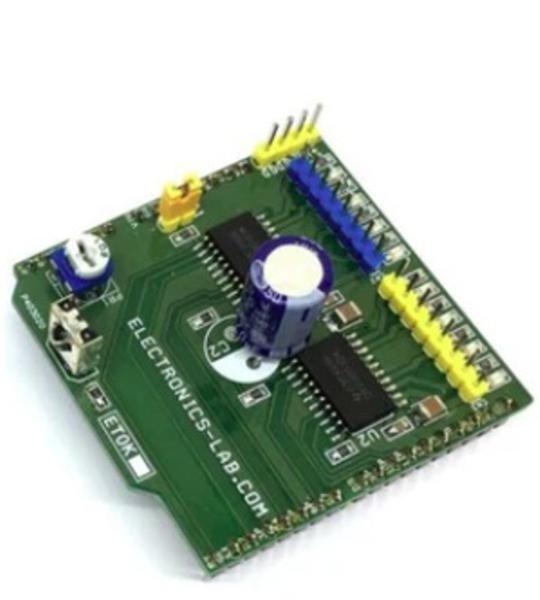
The 8 Channel Driver Arduino UNO Shield is designed to enable users to switch inductive loads for up to 800mA each channel and up to 24V DC with no heat-sink needed. It is ideal for such applications as driving 2x unipolar stepper motors, solenoids, relays, and small DC motors. It uses 2x DRV8803 Chip from Texas instruments which is 4 channel low side driver with over current protection. IC’s Internal shutdown protection function is provided for overcurrent protection, short circuit protection, under-voltage lockout, and over temperature. Faults are indicated by a fault output pin that is normally high and goes low if a fault condition occurs. Reset and enable pins has internal pull-down resistors.
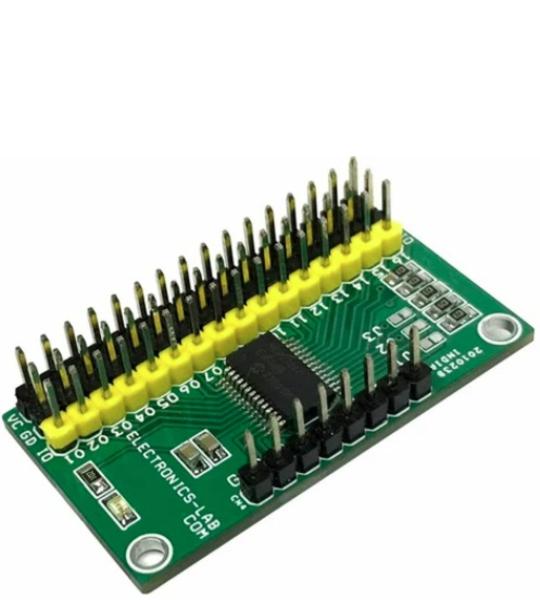
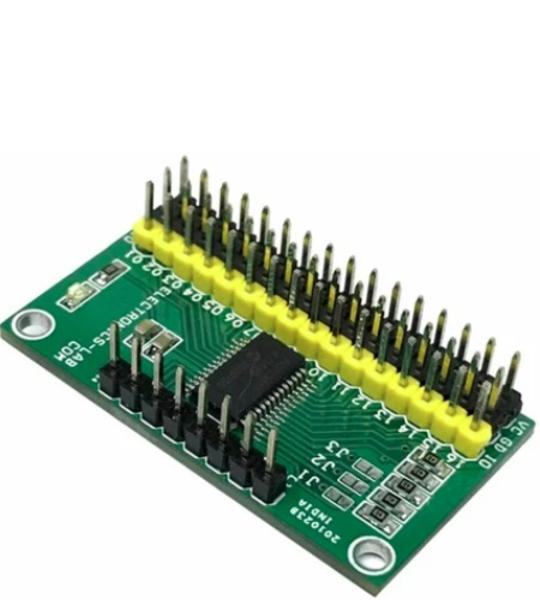
This module provides 16-bit, general-purpose parallel I/O expansion for I2C or SPI bus applications. The MCP23017 chip supports the I2C interface and the MCP23S17 chip is used for the SPI interface. The board can be populated with either SPI or I2C chip. Follow the connection diagrams for interface details.
C111
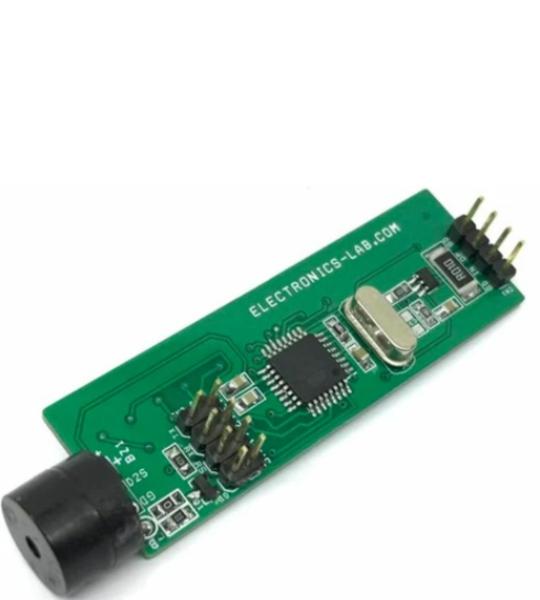
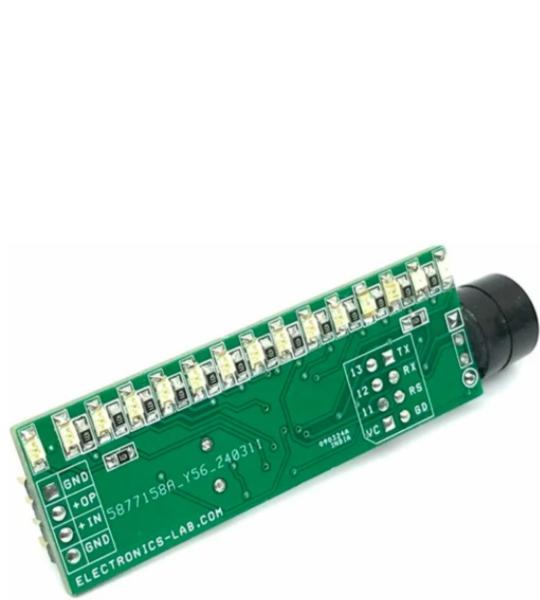
This Bar-Graph Display provides a high visibility 15-Segment Bar-Graph display for current measurements. A buzzer provides audible sound when an over-current condition event occurs. The 15 segments are made with Red, Blue, Green, and yellow color LEDS. All LEDs are SMD size 1206. This tiny board can display 0 to 2A current and provide an Alarm sound when the current level goes more than 2A. The project is Arduino-compatible and is based on an ATMEGA328 chip. INA198 chip measures the load current across the shunt resistor and provides an output voltage to ADC of ATMEGA328. The microcontroller drives and controls the 15 LEDs connected to I/O lines.
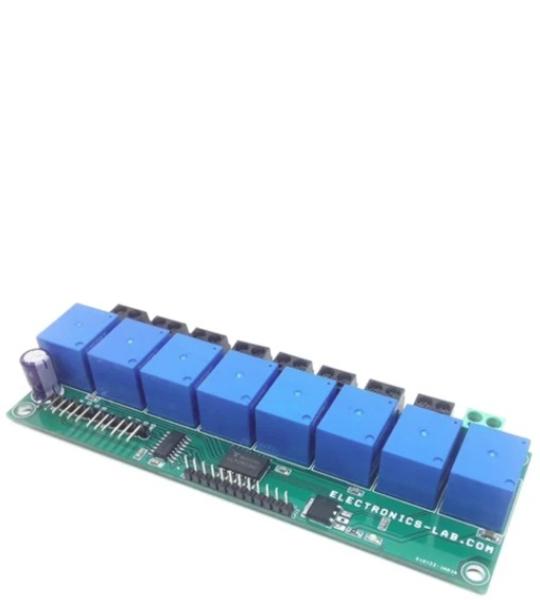
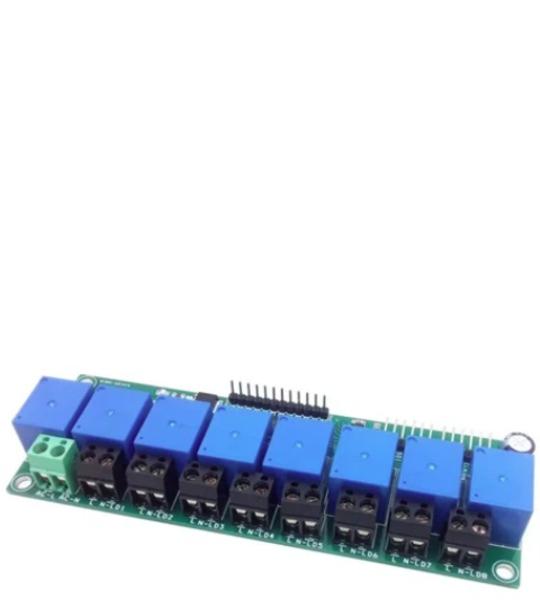
This is an SPI Interface multichannel relay board for high voltage AC or low voltage DC loads. It is ideal for controlling LEDs lights, coffee machines, fans, pumps, or other high-voltage electrical appliances. The board also breaks out the SPI header, so controlling other boards is still possible. Each relay can handle current up to 7A @ 250V AC/30V DC. This 8 x channel board is mainly designed for AC loads, but it can also drive DC loads, screw terminals on each channel enable the easy interface of the AC load, and each point is marked as AC-Live and AC Neutral. Refer to the connection diagram for the interface. The project consists of 8 x 12V relays with load capacity 7A @ 250V AC, ULN2803 8 channel relay driver, 74HC595 SPI to 8 output, 5V regulator 7805, power LED, screw terminals for loads and AC input, header connector for SPI input and output.
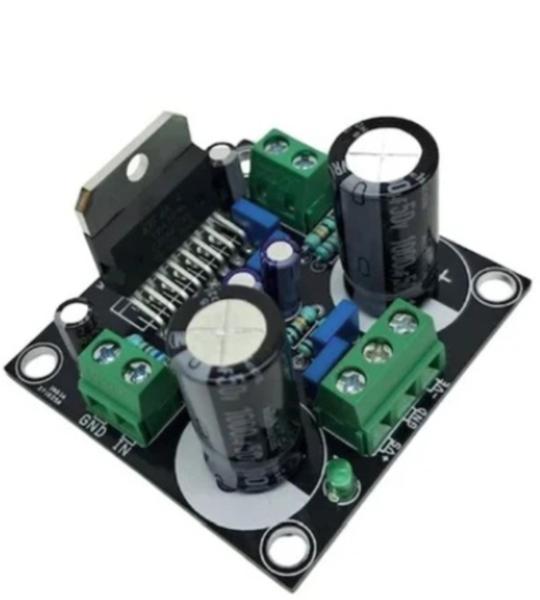
The 60 W Class-AB Audio Amplifier is a single-channel power amplifier board built around the STMicroelectronics TDA7296. This Class-AB amplifier is suited to a wide range of applications, including home stereo systems, self-powered speakers, and high-end televisions.
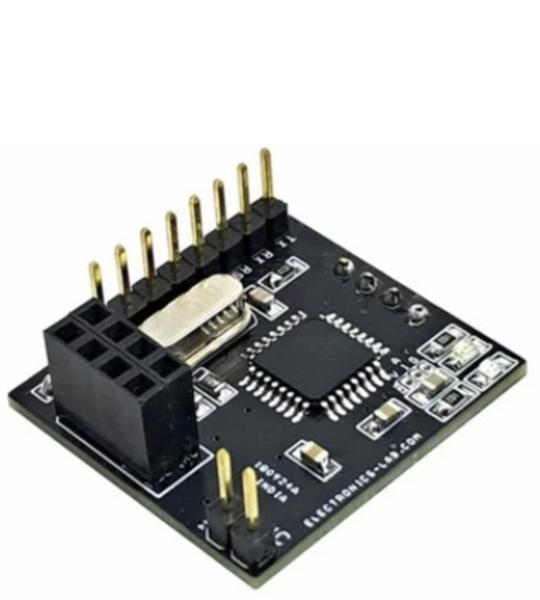
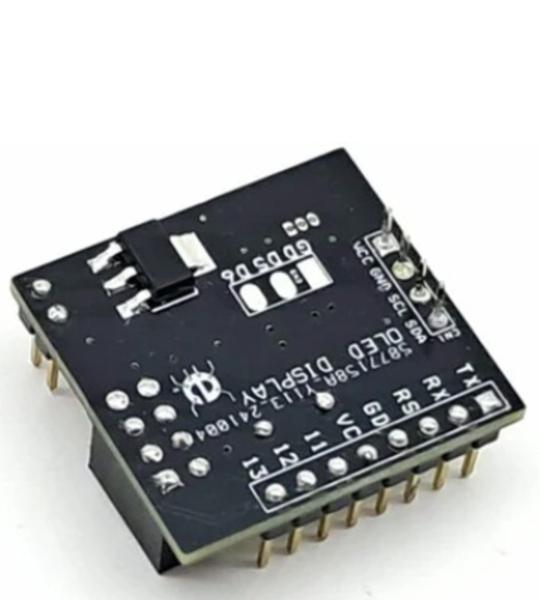
This project is the receiving end of a Wireless Humidity and Temperature monitoring system. The receiver unit is built around an Arduino microcontroller, utilizing the ATMEGA328 chip, which provides a reliable and efficient processing platform. The NRF24L01 transceiver module is used to receive data from the corresponding wireless sensor, while a 0.96-inch I2C OLED display is employed to show the received temperature and humidity values in real time.
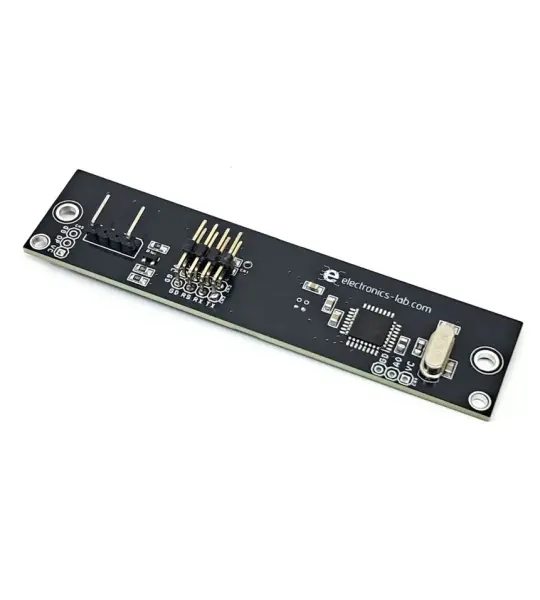
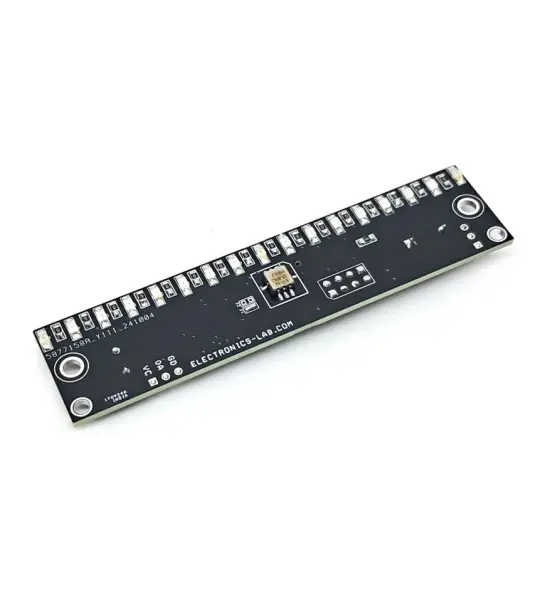
This project is an inclinometer based on the ADXL203/ADXL103 accelerometer chip and the Arduino microcontroller ATMEGA328. The device measures tilt and displays it on a 17-segment bar graph display.
Cookie preferences