USD
USD INR
INR
Call Us Now
+91 9106756572
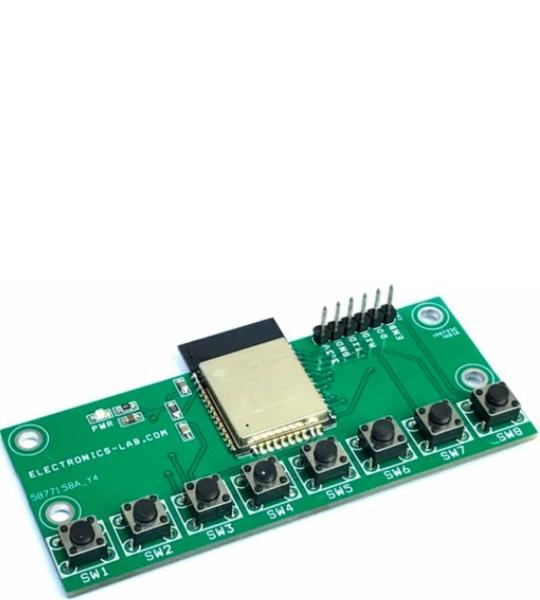
This is an 8-channel remote in a compact board suitable for remote ON/OFF applications using Bluetooth or Wi-Fi protocol. The board consists of an ESP32 module and 8 tactile switches connected to various GPIO. The circuit works with 3.3VDC power supply and a Li-Ion battery can be used to power the board. The onboard LED indicates the power. There is an onboard programming connector that helps users program the ESP32 module using Arduino IDE. The users have to write their own code to use the module, according to their requirements.
H102
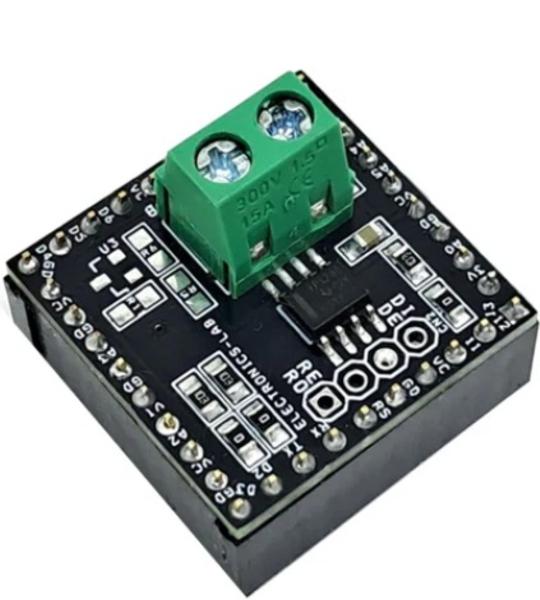
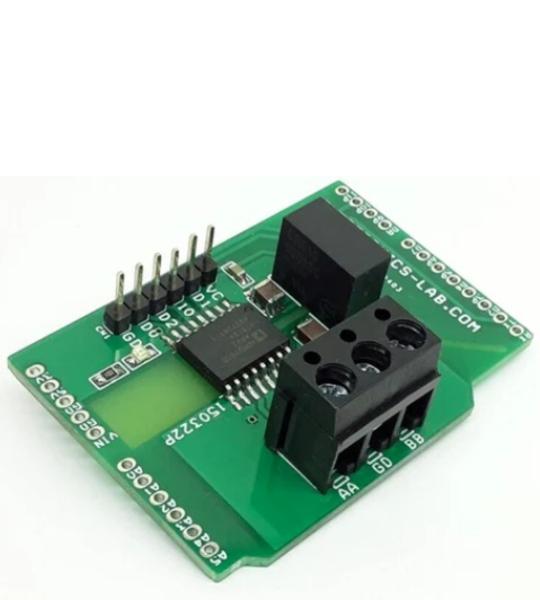
This is a fault protected RS485 shield for OLEDUINO-V2, SN65HVD1782 chip used as RS485 transreceiver, designed to survive overvoltage faults such as direct shorts to power supplies, mis-wiring faults, connector failures, cable crushes, and tool mis-applications. The devices are also robust to ESD events with high levels of protection to the human-body-model specification.
C119
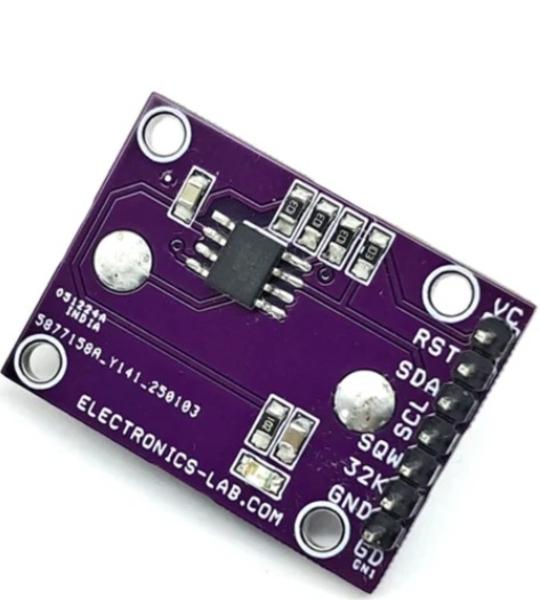
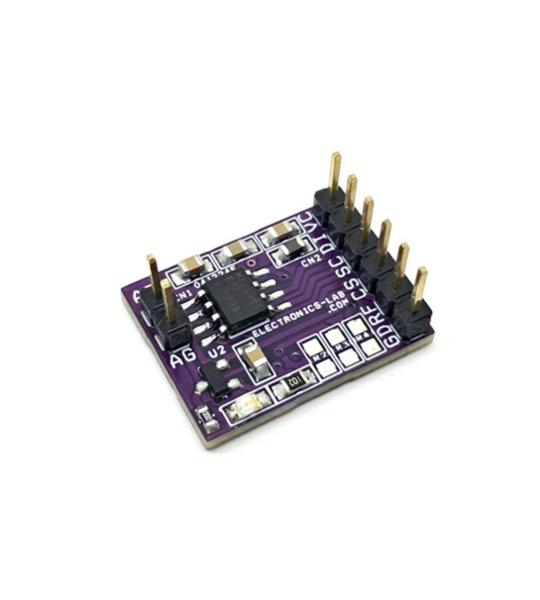
This is low cost and extremely accurate I2C real-time clock (RTC) module that consists of DS3231M low-cost RTC chip, on board 3V battery to maintain accurate timekeeping when main power to the device is interrupted. The integration of the microelectromechanical systems (MEMS) resonator enhances the long-term accuracy of the device.
C120
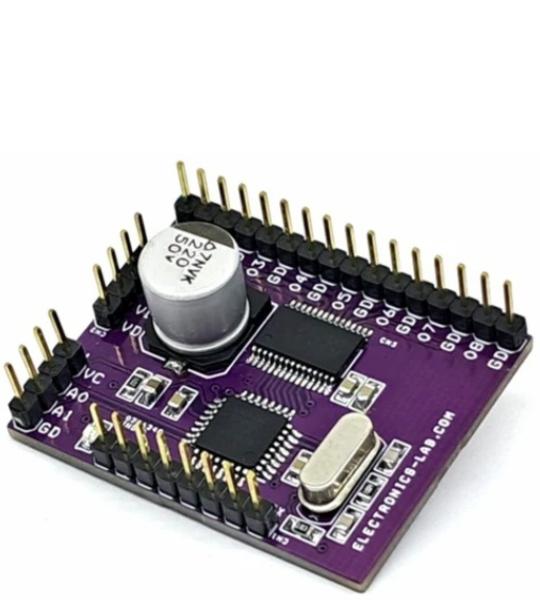
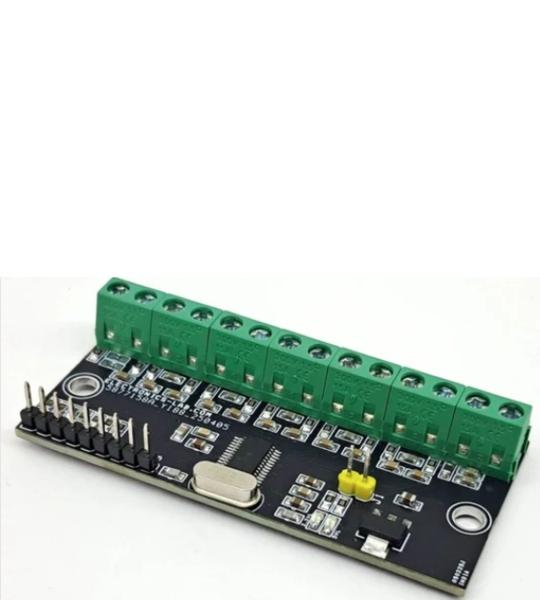
The project presented here is a high-side switch (8 channels) with MOSFET output. The Arduino board consists of an Arduino-compatible microcontroller ATMEGA328 and TPD2015FN – 8 Channels MOSFET switch. All 8 inputs of TPD2015FN are TTL compatible. The project is suitable for driving inductive and resistive loads such as industrial programmable logic controllers, motors, and lamps in factory automation equipment, etc. This product has built-in overcurrent and over-temperature protection functions, which contribute to improved stability of the system.
The project presented here uses the MAX5541 chip, a serial-input, voltage-output, 16-bit monotonic digital-to-analog converter (DAC) that operates from a single +5Vdc supply. Notably, the DAC output is unbuffered, resulting in a low supply current of 0.3mA and a minimal offset error of 1 LSB. The DAC output range spans from 0V to VREF, providing a wide range of voltage output options.
C103
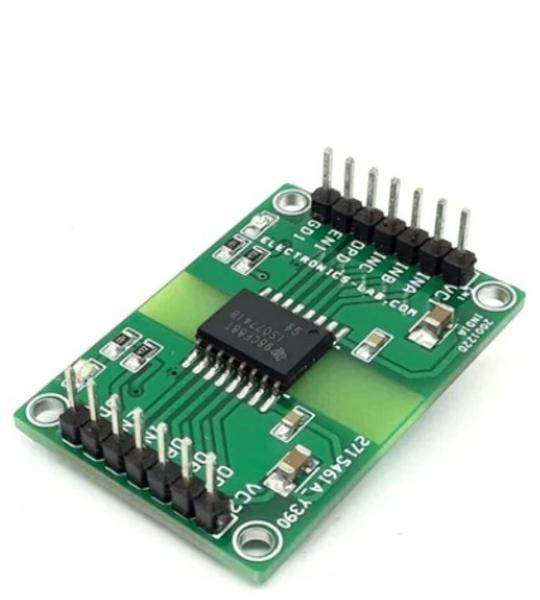
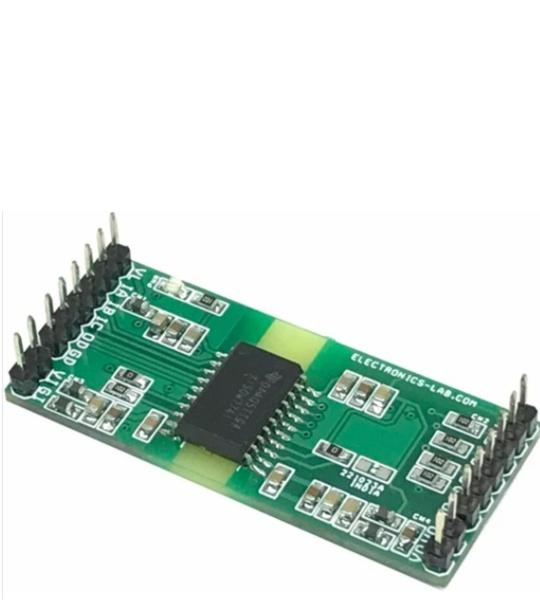
The project described here is a Quad-channel digital isolator with 5000VRMS isolation ratings per UL 1577. The board has three forward and one reverse-direction channel which makes this project ideal for isolated SPI interface between microcontroller and subnode unit. The circuit provides isolation between the main SPI unit (microcontroller) and the SPI slave. It has high electromagnetic immunity, reduces noise, and high voltage traveling to the main unit. All the outputs are normally high, use ENABLE pins to disable the outputs. Connecting Enable 1 and Enable 2 pins to GND respective sides puts all outputs LOW and all outputs are disabled. If the input power or signal is lost then the output goes high. Level translation range: 2.25V to 5.5V.
C105
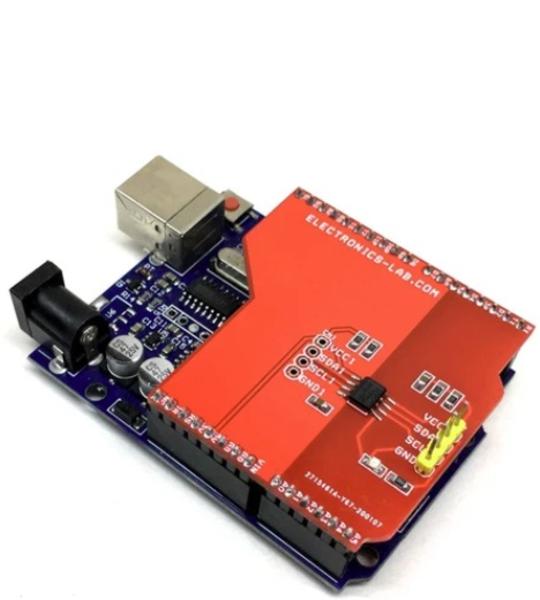
Optically isolator Arduino Shield has been designed to provide optically isolated I2C communication between Arduino and any other device or sensors that works with I2C protocols. I have used the ISO1540 Low-Power Bidirectional I2C Isolator IC from Texas Instruments to build this project, and the device is compatible with I2C interfaces. These devices have logic input and output buffers that are separated by Texas Instruments Capacitive Isolation technology using a silicon dioxide (SiO2) barrier. When used with isolated power supplies, these devices block high voltages, isolate grounds, and prevent noise currents from entering the local ground and interfering with or damaging the Arduino board. The ISO1540 has two isolated bidirectional channels for clock and data lines. The project is suitable for multi-master applications. For applications where clock stretching by the slave is possible. LED D1 is the power indicator for side two. This board requires two separate supplies, side one powered from Arduino UNO 5V, side 2 require separate 3.3V to 5V.
C106
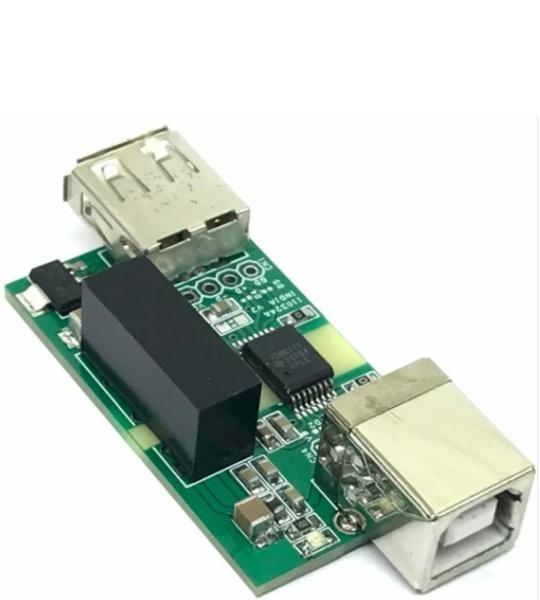
The project presented here is a USB port-powered, USB 2.0 isolator that isolates the USB host and USB device. It is a galvanically-isolated USB2.0 repeater, that supports low speed 1.5Mbps, and full speed 12Mbps communication. The project automatically connects and detects the bus speed. This USB 2.0 isolator is efficiently powered from the USB port and requires no external power, on board isolated DC-DC converter U1 provides 5V to the other side of the circuitry and USB port. U2 LDO provides 3.3V to the chip. L1 and L2 ferrite beads take care of noise immunity on the DC bus. The project protects the host USB port from noise and high voltage.
C107
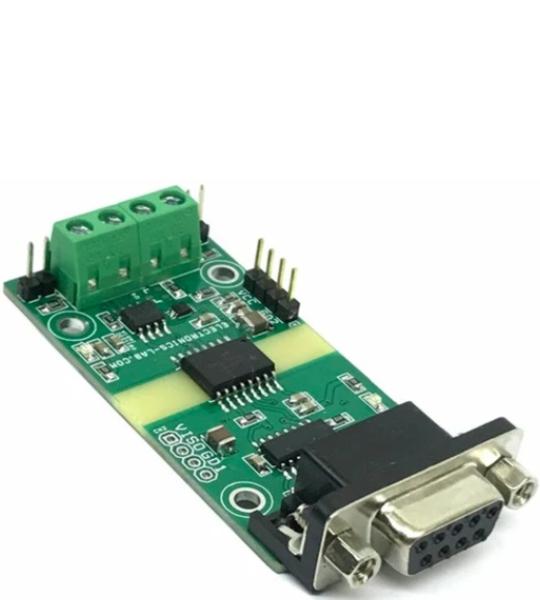
This module provides a solution for converting RS232 signaling to RS485 signaling. This allows long-distance communication since the range supported by RS232 is normally less than 50 feet while RS485’s range can exceed 1000 feet. The design features an RS232 transceiver, an RS485 transceiver, a multivibrator, and a digital isolator with integrated power to implement bidirectional half-duplex communication without any software interference. The board has been tested for up to 800 feet in length with a two-wire twisted pair cable. Up to 115200 baud rate communication between two PCs via serial port has been successful. The design features the industrial standard IEC 61000-4-2 and 61000-4-4 protection with 5000 Vrms isolation protection.
C121
This is a low-noise, 32-bit, 38-kSPS, 10-channel (multiplexed), delta-sigma (ΔΣ) analog-to-digital converter (ADC) module. The project consists of highly integrated ADS1263 and includes a programmable gain amplifier (PGA), a 2.5-V low-drift voltage reference, an internal oscillator, dual-sensor excitation current sources (IDAC), several system-monitoring features, and an auxiliary 24-bit ΔΣ ADC. The integrated features and excellent performance of the ADS1262 enable precision measurement of strain gauges, weight scales, pressure sensors, thermocouples, thermistors, and resistance temperature detectors (RTDs).
C108
Module is an isolated RS-485 transceiver that features up to ±42 V of ac/dc peak bus overvoltage fault protection on the RS-485 bus pins. The project is based on the ADM2795E chip. The device integrates Analog Devices, Inc., iCoupler® technology to combine a 3-channel isolator, RS-485 transceiver, and IEC electromagnetic compatibility (EMC) transient protection in a single package. The ADM2795E is an RS-485/RS-422 transceiver that integrates IEC 61000-4-5 Level 4 surge protection, allowing up to ±4 kV protection on the RS-485 bus pins (A and B). The device has IEC 61000-4-4 Level 4 EFT protection of up to ±2 kV and IEC 61000-4-2 Level 4 ESD protection on the bus pins, allowing this device to withstand up to ±15 kV on the transceiver interface pins without latching up. This device has an extended common-mode input range of ±25 V to improve data communication reliability in noisy environments. Supports a data rate 2.5Mbps. The board operates with 5V DC, isolated DC-DC converter U1 helps to power the VDD2 supply. D1 is Power LED
C109
This simple, compact solution is ideal for isolated SPI data requiring communication across different ground potentials often found in Industrial PLCs (programmable logic controllers) and Instrumentation and data acquisition systems. Serial Peripheral Interface (SPI) is a protocol that is commonly used for communication between microcontrollers and peripheral ICs such as sensors, ADCs, DACs, and others. The project is based on an ISOW7741 quad-channel digital isolator with an integrated DC-DC converter. For many industrial control applications, the communications pathway between the microcontroller and the I/O module devices must be isolated. Isolation helps to minimize noise and ground loop issues and also protects expensive control units (MCUs or FPGAs) and equipment operators. This module is the solution to all these problems and the inbuilt DC-DC converter is a great advantage that powers the output side of the circuitry and thus the project can work with a single supply. The DC-DC converter output can be used to power the peripherals device maximum load up to 100mA with 5VDC input.
C110
Cookie preferences