USD
USD INR
INR
Call Us Now
+91 9106756572
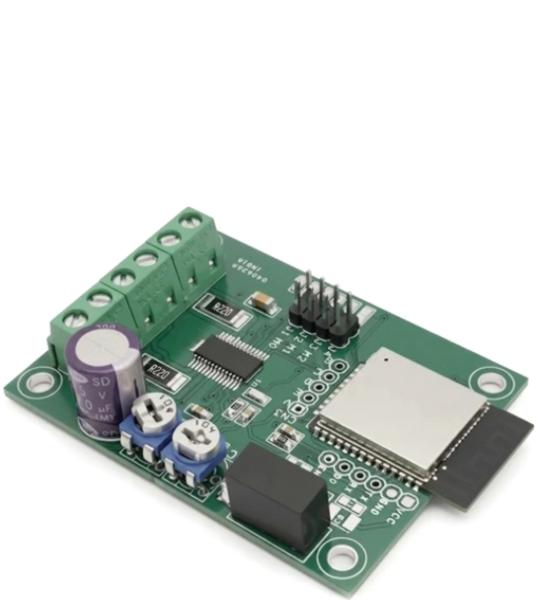
This Wi-Fi Stepper Motor Driver enables remote control of a bipolar stepper motor over a wireless network. The project is based on the ESP32 Wi-Fi microcontroller and the BD63731EFV stepper motor driver IC, providing a compact and reliable solution for motion control applications.
The driver operates from a 24 VDC power supply and is capable of driving bipolar stepper motors with output currents of up to 3A. The BD63731EFV supports multiple micro-stepping modes, allowing smooth and precise motor operation while reducing vibration and audible noise.
This Wi-Fi Stepper Motor Driver enables remote control of a bipolar stepper motor over a wireless network. The project is based on the ESP32 Wi-Fi microcontroller and the BD63731EFV stepper motor driver IC, providing a compact and reliable solution for motion control applications.
The driver operates from a 24 VDC power supply and is capable of driving bipolar stepper motors with output currents of up to 3A. The BD63731EFV supports multiple micro-stepping modes, allowing smooth and precise motor operation while reducing vibration and audible noise.
This module is designed to operate from a 24 VDC power supply. The onboard isolated DC-DC converter (U6) converts the 24 V input into an isolated 3.3 VDC supply for the ESP32 microcontroller and associated logic circuitry.
As an alternative power option, the PCB also provides footprints for an LM317 voltage regulator (U7) along with output-setting resistors R12 and R13. If the LM317 regulator is installed, do not populate the DC-DC converter (U6). Only one of these power supply options should be used at a time.
The bipolar stepper motor driver is based on the BD63731EFV high-performance stepper motor driver IC, a low-power PWM current-controlled driver designed for efficient and precise motor control. The module operates from a 24 VDC power supply and is capable of delivering up to 3.0 A output current, making it suitable for a wide range of bipolar stepper motors.
The driver uses a CLK-IN interface, requiring only STEP (CLK) and DIRECTION (DIR) input signals for motor control. It supports multiple excitation (micro-stepping) modes, including:
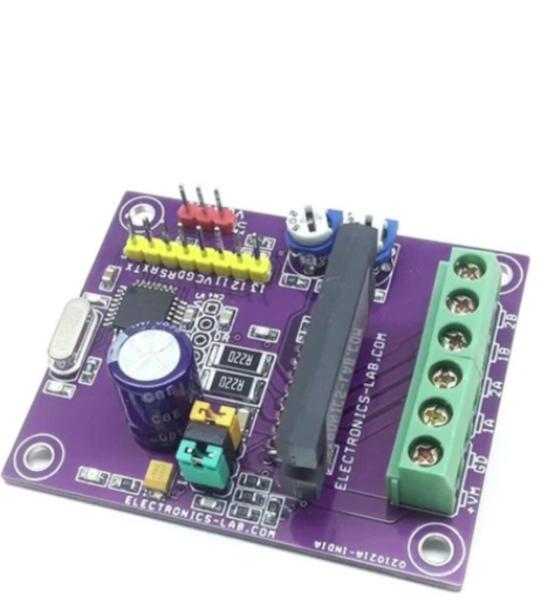
This is an Arduino compatible board that contains an Atmega328 microcontroller and Bipolar Stepper Motor Driver chip STK682-010. This Hybrid IC from ON Semiconductor can deliver up to 2.5A current and it can have an input supply up to 32V DC. It has multiple micro-stepping options such as Full step, 1/2th Step, 1/4th Step, 1/8th Step, 1/16th Step, 1/32th Step, 1/64th Step, 1/128th Step. PR1 trimmer potentiometer is provided to set the decay, 3.5V Slow Decay, 1.1V to 3.1V Mixed Decay, 0.8V-1V Fast Decay, and PR2 Trimmer Potentiometer provided to set the output current. Chopping frequency set to 83.3 Khz using capacitor C5 100PF. Micro-Stepping can be set with the help of jumper J1, J2, J3. This board is by default enabled since the enable pin has a pull-up resistor, but you can provide a low signal to disable the motor driver chip. Atmega328D provides Direction pulse, Step pulse, Enable control, etc. The IC has built-in automatic half current functions to reduce the vibrations & current while the motor is in static mode. It is important to use a heatsink on the motor driver chip. Refer to the micro-stepping table to set the micro-stepping. Board requires a Motor power supply as well logic supply 5Vdc.
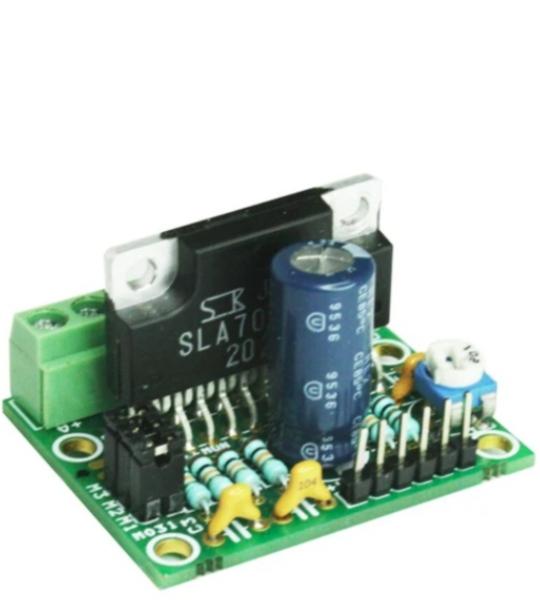
This tiny Unipolar stepper motor driver has been designed around SLA7078MPR IC from Sanken. It is a unipolar stepper Motor driver that can handle current up to 3 Amps and has micro-stepping up to 1/16 steps. On-board Jumpers are available to set the Micro-stepping and Preset (Potentiometer) to set the current.
The SLA7078MPR series motor driver ICs features unipolar drivers. The clock-in type input interface allows simplified control logic, and options for built-in sense current detection and load circuit short or open protection (patent pending) provide lower loss, and lower thermal resistance.
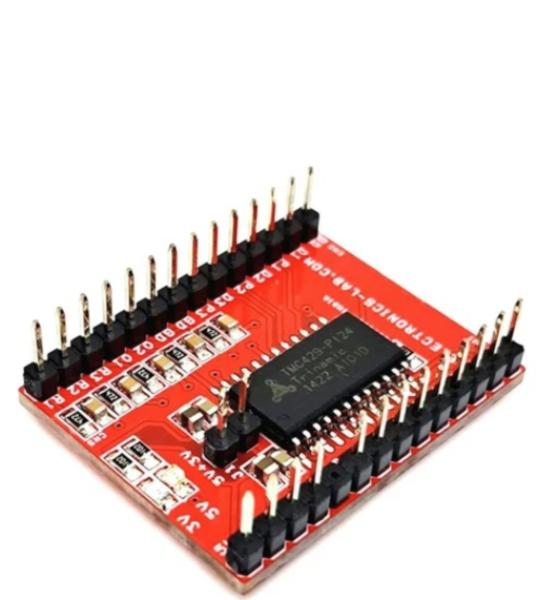
This TMC429 Breakout Board is a versatile motion control solution that enables users to create sophisticated three-axis motion control systems. This board interfaces with the TMC429 chip through SPI communication and provides 3-axis step/direction output signals along with limit switch inputs.
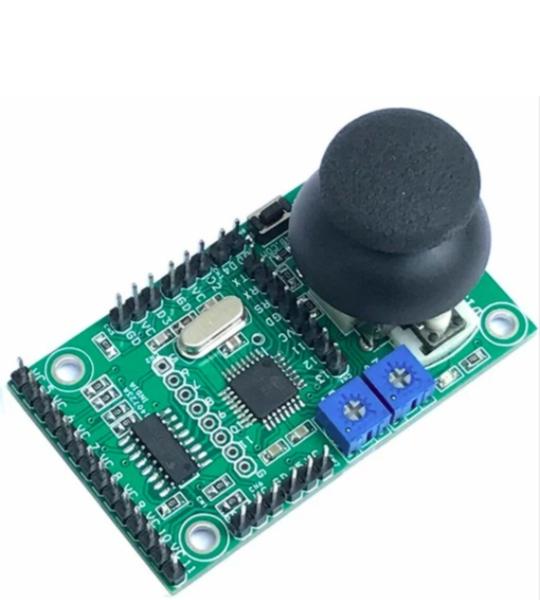
This is a pulse generator for a stepper motor driver using a joystick. It is a board that contains an Arduino-compatible microcontroller and circuitry for controlling up to 2-channel (2-axis) stepper motors. The board has multiple options to develop stepper motor-related control systems, from a 2-axis analog joystick to a trimmer potentiometer to a 7-channel open collector TTL output to interface stepper drivers with optocoupler inputs, etc.
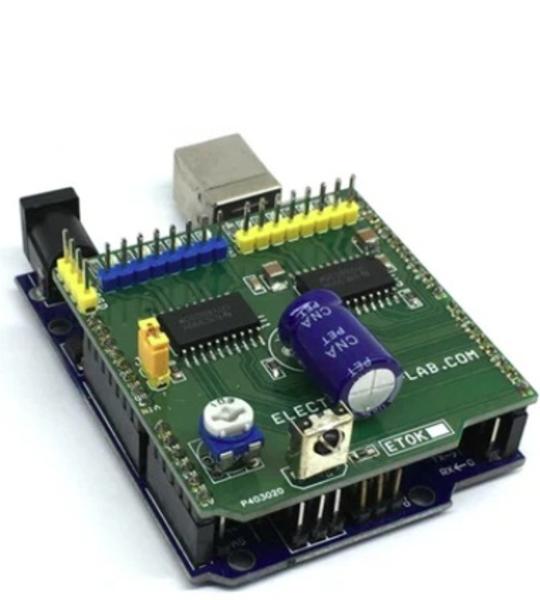
The 8 Channel Driver Arduino UNO Shield is designed to enable users to switch inductive loads for up to 800mA each channel and up to 24V DC with no heat-sink needed. It is ideal for such applications as driving 2x unipolar stepper motors, solenoids, relays, and small DC motors. It uses 2x DRV8803 Chip from Texas instruments which is 4 channel low side driver with over current protection. IC’s Internal shutdown protection function is provided for overcurrent protection, short circuit protection, under-voltage lockout, and over temperature. Faults are indicated by a fault output pin that is normally high and goes low if a fault condition occurs. Reset and enable pins has internal pull-down resistors.
Cookie preferences